Called To Share

Year B, Second Sunday of Easter; Acts 2:32-35; Lectionary reading for Sunday, April 11, 2021

I love reading about the early church in Acts. Imagine their enthusiasm for the new Way Jesus had provided! Of course there were conflicts, of course there were dangers, but passages like this in Acts 4 helps me envision not just a past, but a future where Christians live in harmony, sharing burdens and joys and making sure everyone has what they need. I won’t get into the argument for everyday Christians giving up all their possessions and turning to a communal life, but the message here is clear: we are called upon to share, even to everything we have.

Sharing is a frequent theme in children’s literature, because for young children who have just learnt the word “mine,” sharing is HARD. But wherever you land on the political spectrum and whatever your opinion of our current economic system, we can agree that children need to learn to share— and so do some adults. I will focus on my new favourite book about sharing, but I’ll also link to some classics so you have a few choices to turn to.

I recently discovered the author/illustrator Oge Mora and I am in love with her artistic style and meaningful stories. Thank You, Omu! tells the story of Omu (the Igbo word for Queen), a community elder cooking a delicious and particularly aromatic stew. As the smell wafts out her window, a variety of community members follow their noses up to her apartment. Even though she’s looking forward to sitting down to the best supper ever, she fills bowls for each of her visitors until there’s none left. Like every good book about sharing, Omu is rewarded for her selflessness, but I won’t spoil the lovely surprise ending.

Questions to ask before you read:

  • What is your favourite food? Is it difficult to share?
  • How would you feel if someone else ate ALL of your favourite food?
  • Who is it easy to share with? Who is it difficult to share with?

Questions to ask after you read:

  • Did Omu know her neighbours would come back?
  • Do you think she did the right thing when she shared until she didn’t have any left?

I hope you add Thank You, Omu! to your ministry library. If you click on the book (or on the links below), Amazon will work its magic and get it to your mailbox and I will receive a small commission. Check your library and your friendly neighbourhood school teacher too!

Mora, Oge. Thank You, Omu! Little, Brown Books for Young Readers, 2018

Some other sharing books to consider:
God Doesn’t Have Favourites!

Year B, Easter; Acts 10:34-43; Lectionary reading for April 4, 2021

The good news is for everyone!

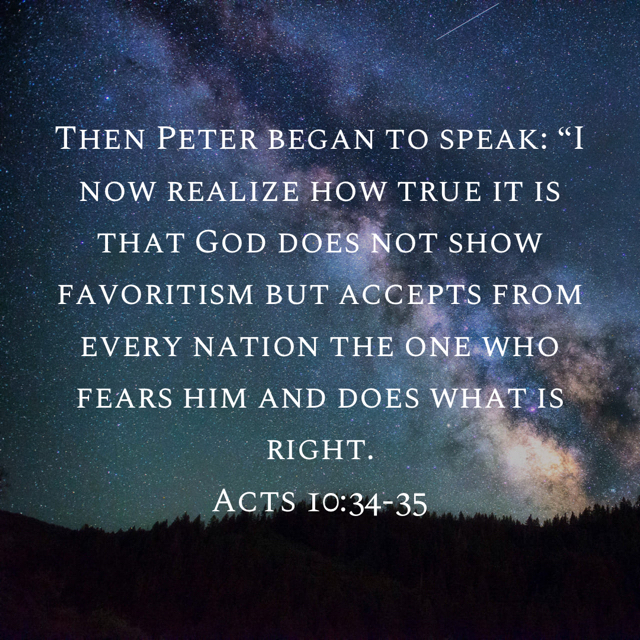
God didn’t choose to save only the Jews. From the very beginning, when God calls Abram, he is told that “all peoples on earth will be blessed through you (Gen 12:3)”, but tribalism is as difficult to shake now as it was in Abram’s time. Even though the resurrected Jesus commissions the disciples to spread the Word around the world, and even though they received the gift of tongues at Pentecost, God knows Peter isn’t quite ready for God’s blessing to be upon non-Jews and Jews. God sends a vision to Peter and an angel to the centurion Cornelius, and finally Peter understands.

Yes, but…

Nope. No buts about it.

No matter who you are, where you’re from, the colour of your skin, what language you speak, your gender, or who you love, if you fear (honour, respect, and revere) God and do what is right, God accepts you into God’s family.

Jamie Lee Curtis’s book, Is There Really a Human Race? helps put this into perspective. The story is told as a child asking a parent questions about this human ‘race’ we seem to be in. Where are we going? Why are we racing? Is the race fair? Eventually the perspective switches to the parent, who reassures their little one that we aren’t actually in a race with other people, and in fact, we experience far more success when we cooperate rather than compete. There’s a lot going on in the illustrations, so plan on leaving this book out in the Sunday school room, or when it’s safe to pass something around during coffee and fellowship (remember those days? Sigh.).

Questions to ask before you read:

  • Do you like being in races and contests?
  • Would they still be fun if EVERYTHING was a race or a contest?
  • Can you win God’s love in a race?

Questions to ask after you read:

  • Can you tell if someone loves God by looking at them?
  • Can you lose God’s love in a race?
  • Why do you think God made so many different kinds of people?

I hope you use this book in your ministry, but be warned: it can be a bit of a tongue-twister, so practice reading it out loud first! If you click on the picture of the book below, Amazon will happily sell you a copy and I will receive a small commission to help support the site. Check your local library for a copy too!

Curtis, Jamie Lee. Is There Really a Human Race? HarperCollins, 2006.

This Easter Book Rocks

Year B: Easter John 20:1-18; Lectionary reading for April 4, 2021

Halleluiah! He is risen!

While many of the books I feature here help children understand the meaning behind the lectionary reading for the week, Easter calls for a book that showcases the story itself. The Easter miracle is foundational to our faith, and we should encourage children to listen to, read, retell, and dramatize it over and over. There are plenty of books about Easter aimed at younger audiences, and your church likely has one or two already, however, it’s difficult to find one book that will appeal to a wide range of ages. 

Patti Rokus’s retelling of the Easter story is simple, direct, and beautiful. Each page features scripture along with a paraphrase of the passage, but what sets this book apart are the illustrations. Rokus used rocks of all shapes and sizes to recreate scenes from Holy Week and through to the Ascencion. While at first this might seem like a gimmick, the resulting images are profoundly moving.

Early-years educators know the value of ‘loose parts’ in imaginative play, and this book is a bridge to similar activities in Sunday School. Bring out a basket of pebbles—smooth and rough, large and small—and see what beautiful scenes your children create. Perhaps start by encouraging them to recreate Easter scenes, but be sure to give them time to create other biblical scenes or scenes from their imaginations.

This book provides its own question to ask after you read it:

  • How will you show your love for Jesus?

If you click on the book images, it will whisk you off to Amazon where you can purchase the book and support this website with a small commission. While not as widely available in Saskatchewan libraries as other books I’ve featured, other regions might have more copies.

Rokus, Patti. He is Risen: Rocks Tell the Story of Easter. Zondervan, 2019.

Stand Up and Say Something!

Year B, Palm/Passion Sunday; Lectionary reading for March 28, 2021

Last week I confessed I buy Peter Reynolds’s books as soon as they are released when I featured a book he illustrated. This week, I’d like to introduce you to a book he both wrote and illustrated, Say Something.

When we hear the word ‘prophet,’ we tend to equate it with fortune telling, and yes, the prophets of the Hebrew Scriptures did their fair share of predicting the future. However, their role was far more significant than gazing into a crystal ball and warning the Israelites of calamities to come.

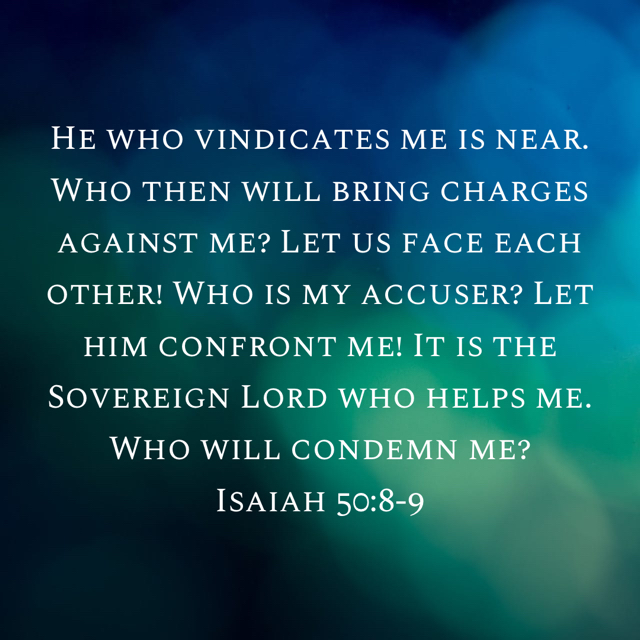
Prophets like Isaiah were more like divinely appointed critics than fortune tellers. Isaiah’s role was to steer Israel’s leaders and the people towards God, and that meant pointing out all the ways in which they had failed to live up to God’s expectations. In this brief passage, Isaiah tells the Israelites that no matter how they might despise and torture him, he will hold fast to God’s message.

Essentially, a prophet is one who challenges those in power and stands up for what they believe is right. Challenging the status quo or speaking truth to power isn’t reserved for ancient men who heard directly from God. The children in our ministries should know that they, too, can speak up when they see injustices in their communities.

Peter Reynolds reminds children (and their families!) that everyone’s voice deserves to be heard. This book encourages readers to express their creativity, advocate for peace, and fight injustice. While this book fits well with today’s scripture, you might also set it aside for the next time there are protest marches in your community or on the news, to help the children in your care understand what is happening.

Questions to ask before you read:

  • How would you feel if you saw someone bigger and stronger than you do something terrible, like hurting a little kid? What would you do?
  • What are some problems you see in your community?

Questions to ask after you read:

  • What ideas do you have that could improve our community?
  • What would you put on a sign if you could tell the entire world something?

Reynolds, Peter. Say Something. Scholastic Canada, 2019

Friendly reminder that if you click on the book images, you can buy the book through Amazon and I earn a small commission to support the website. Or use your library, that’s great too.