Eating Macaroni in the Bathtub

Year B, Sixth Sunday of Easter, Acts 10:44-48, Lectionary reading for May 9th, 2021

The Jews in Jesus’ time thought they had a monopoly on God. They were the chosen people. They were in covenant with God and knew how to follow the rules to stay right with God. They had high standards of conduct, and if you did not live up to the standard, you could be denied entry to the temple— and therefore, God. Several scenes in the book of Acts report how this understanding of God and who God loved changed for Jesus’ followers. Peter has a vision to help him understand all are welcome, Philip baptises the Ethiopian Eunuch, and here, the Holy Spirit falls upon Gentiles (non-Jews).

The followers of Jesus needed to hear the lesson that all are welcome in the Kingdom of God repeatedly, and I don’t judge them for that one bit. Are we not the same, 2000 years later? Throughout human history, from long before Jesus walked the earth up to the present day, we have struggled with us/them thinking. WE have the answer; THEY are doomed. WE are civilized; THEY are barbarians. WE are human; THEY are animals.

You don’t have to look very hard to find cute videos of Black and white children hugging each other or claiming to be twins because their shirts match. They are heartwarming and give us an opportunity to pat our collective selves on the back. “See, we do live in a post-racial society!” The older those cute little children grow though, the more aware they become of differences around them, and how adults judge those differences. It doesn’t take long for them to realize that most of the world thinks different=wrong.

Fighting back against that thinking is a critical task for parents, teachers, and those who minister to children. The Holy Spirit flowed out upon the Gentiles and Jews alike, because God loves the diversity of creation. Why else would God have created so much diversity?

I wish a single storybook could innoculate our children against fearing and hating difference, but it takes consistent messages of acceptance over a lifetime to fight against the persistence of ‘othering’. Still, a storybook is a pretty good place to start, isn’t it? When Todd Parr writes and draws about diversity, you can’t help but be pulled into the message. His bright, silly illustrations lighten the mood and open our hearts to a deep truth: we are all human, even if we eat macaroni and cheese in the bathtub.

Todd Parr’s message of self-confidence, inclusion, and acceptance should be read once a week for best results, but even if you only read it once in your children’s ministry, you are helping to break down the walls we build between US and THEM, and making the world a little more loving.

Questions to ask before you read:

  • What makes you different from anyone else?
  • How do you feel when you meet someone who looks or acts differently than you?

Questions to ask after you read:

  • Why do you think God made so many different kinds of people?
  • What can you do to get to know people who are different than you?

Thanks for reading my blog, and I hope you will use It’s Okay to Be Different in your ministry! Please consider subscribing to get email updates every time I write a post, and remember to share posts with your friends in children’s ministry! If you click on the book image, you can purchase the book and help support my work with a small commission.

Parr, Todd. It’s Okay to Be Different. Little, Brown Books for Young Readers, 2009.

How do we lay down our lives? Y’know, without actually dying?

Year B, Sixth Sunday of Easter: John 15:13-14 Lectionary reading for May 9, 2021

A couple of years ago I read a meditation about the nature of the Gospels that forever changed how I read them:

The three synoptic Gospels are largely talking about Jesus, the historical figure who healed and taught and lived in human history. John’s Gospel presents the trans-historical “Christ.”

-Fr. Richard Rohr

I wanted to start with this statement of how I interpret the Gospel of John because it speaks further to my rejection of dogma (see my post from April 10th). I don’t think John ever intended for his Gospel to be read literally; rather, it needs to be read with a much wider lens.

Jesus the Christ laid down his physical life for his friends as an example for how we are to live, putting love ahead of all else. I would hope as adults, we would agree that there is no higher love than laying down our lives for a friend, but we can’t look at in terms of binary goodness: martyrdom good, staying alive to fight another day, bad. With children, we need to talk about how Jesus sacrificed his life for his friends, but also introduce them to the metaphorical understanding of the crucifixion as well: doing hard things, sometimes REALLY hard things to help our friends and do what is right.

There’s so much to love about What Can a Citizen Do? Dave Eggers’ book features gloriously diverse kids drawn by Shawn Harris who work together to build something none of them could build alone. The words describe how citizens have responsibilities to each other, but the art shows something more: how we are sometimes called to put our own comfort aside to make life better for our friends.

A citizen’s not what you are—a citizen is what you do.

Dave Eggers

The book never specifies the location of citizenship, and I think this is a great opportunity to talk about how, while we are citizens of our communities, we are also citizens of the Kingdom of God, and that holds us to even higher standards. The book demonstrates that while laying down our lives for our friends can be uncomfortable and challenging, it is critical if we want to live the Kingdom of love during our lives.

Questions to ask before you read:

  • What is a citizen?
  • What communities are you a citizen of?
  • What are your responsibilities as a citizen?

Discussion for after you read:

  • Tell about a time you when it was hard, but you helped someone anyway.
  • Tell about a time someone put their own comfort aside to help you.
  • What can we do to make sure everyone feels welcome in the Kingdom of God?

Thank you to everyone who has subscribed to this blog, my Facebook page, and my Instagram. Your support means a lot! Please forward this post to others in your circle of friends who may find it useful in their work with children. As always, if you click on the book covers, you can purchase the featured book at Amazon and I will receive a small commission that helps pay to keep this site up and running.

Eggers, Dave. What Can a Citizen Do? Chronicle Books, 2018.

Love, Especially When It’s Hard.

Year B, Fifth Week of Easter; 1 John 4:7-21; Lectionary reading for May 2, 2021

When my kids were 6 and 8, we unexpectedly took in a 5-year-old foster son. A little boy in my kindergarten classroom could no longer stay with his current foster family and was going to spend Christmas at an emergency care home 2 hours away. I reached out to his social worker to see if he could spend Christmas vacation with us so he wouldn’t be with strangers, and he stayed with us for 8 months. It was wonderful, heartbreaking, hard, and we needed to do it for one of ‘the least of these.’

Big D had the warmest smile and was born to cuddle. He loved listening to stories as long as he could wiggle, and could dribble a basketball like nobody’s business. He was always on the move, but put a kitten in his lap, and he’d stroke her fur long enough for us to get supper on the table. He had a hard time remembering things like how to spell his name or count to 5, but he memorized our family prayers within days of moving in. He was easy to love.

But Big D was also a handful. He needed constant close supervision because his behaviour was so unpredictable. He told so many lies it was hard to tell when he was being truthful. He stole things. A lot of things. Thankfully, he always hid them in the same place! Despite the best supervision we could provide, he still stole a friend’s iPod, a lighter from the hardware store, and $100 from the hot lunch cash box at school, along with countless small, shiny things from around the house that we’d find under his pillow each day. He was hard to love.

I needed to remind myself daily of this passage from 1 John. Christ lived in that little boy, and I had to love Big D no matter how tough it was. Abiding in Christ wasn’t just a theoretical experience during those 8 months; it was a daily necessity. While I have spent many years cultivating a loving, positive outlook and manner, loving Big D the way John commands every day felt impossible. By leaning on God, I succeeded more days than I failed.

I found this little book a couple months after Big D came to live with us, and I have complete faith the Holy Spirit put it in my hands. At first, I thought it would be a great book to read to my son Tim, who struggled with jealousy. He had a hard time believing I could love another kid without me loving him any less. I think it helped Tim, but mostly, when I picked this book at bedtime, I was reading it for me.

God loves us so completely he sent us Jesus. God loves us no matter how many of us crowd onto the planet; God loves us even if we eat fast food and watch too much Netflix. God loves us so that we can learn to love like God does. Just as it doesn’t matter how many children are in a family, a parent’s love expands to fit them all, we all have an infinite supply of love when we abide in Christ.

Ok, ok, I’ve made this post way too personal and if I keep going I’ll likely cry, so to wrap up: the kids in your ministry need to know that God will always give them more love than they can ever give away, and the adults in your ministry? They need to hear the same message.

Questions to ask before you read:

  • Who gets more love: a kid with no siblings or a kid with lots of siblings?
  • Does God love you when you are naughty?
  • Does your family love you when you are naughty?

Questions to ask after you read:

  • Is it always easy to love the people in your family?
  • Can you love someone you’ve never met?
  • How do you show love to someone you don’t know very well?

I am morally obligated to inform you of my little money-making scheme with Amazon, the one where you click on a book and I earn a 5% commission, but since no one ever actually does, these extra words are just for fun. This book is less than $10 though, so if… let’s see… carry the 1… if 154 people bought this book, I could pay for my domain name this year!

Docherty, Helen. You Can Never Run Out of Love. Scholastic, Inc. 2017.

Christ Is For Everyone. Yes, Everyone!

Year B, Fifth Sunday of Easter Acts 8:26-40; Lectionary reading for May 2

Remember earlier in Acts when Peter needed a vision from God to understand that the Good News was for everyone, not just Jews? This story is similar, and for good reason. 2000 years ago, gods were understood to belong to a specific group of people or to a geographic location. Until Jesus, Yahweh ‘belonged’ only to the descendents of Abraham.

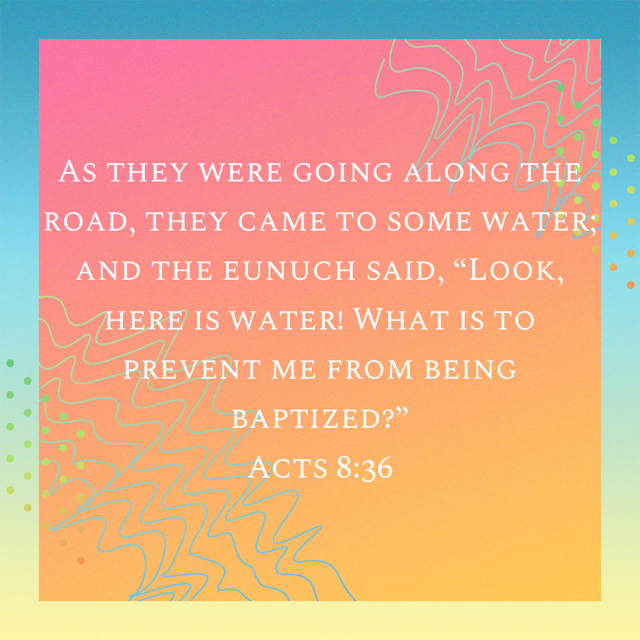
But God did a new thing! At the beginning of Acts, Jesus promised the apostles that they would witness for him in Jerusalem, Judea, Samaria, and to the uttermost parts of the earth (Acts 1:8). Jesus sent the disciples out into the world to proclaim the Good News to people far and wide. This would have taken some getting used to. Sure, they had received the gift of tongues and could speak to and understand the people in these new lands, but as Jews, well-acquainted with persecution, preaching to strangers must have been quite intimidating. Here in Acts Chapter 8, the Holy Spirit directs Philip to speak to the Ethiopian eunuch. While this man wasn’t likely from as far away as modern Ethiopia, his homeland would definitely have counted as “the uttermost parts of the earth.” Did God really intend his message to extend to those people? To top it all off, this man was a eunuch, which according to Levitical law, made him unfit to make offerings to Yahweh.

The Ethiopian eunuch was a foreigner who looked and spoke differently from anyone the disciples had ever met, and he was… blemished. If he had been in Jerusalem to worship, he must have believed in the God of the Israelites, but he would have been an outcast in Jerusalem; not admitted in the Temple. While you probably don’t need to get into the specifics with your little ones, it might be helpful to explain that Philip knew something was very different about the man in the chariot. Still, with the push of the Holy Spirit, Philip helps the Ethiopian understand the prophecies in Isaiah and baptizes him. He welcomes him into the family of God without caring about where he’s from, what he looks like, or the state of his body. This is a revolutionary welcome! No wonder the Ethiopian “went on his way rejoicing (Acts 8:39).”

The world is a much smaller place than it was in Philip’s time, but even in the most multicultural of cities, it’s easy to spend most of our time with people that look, speak, and live just like us. Philip needed an angel and the Holy Spirit to get him to look past appearances and cultural biases to witness to the Ethiopian; and sometimes, we do to.

This beautiful little book by Rachel Isadora just might be the Holy Spirit in disguise for someone in your congregation. Little Carmelita lives in a neighborhood alongside people from around the world. She goes to visit her grandmother and greets everyone she meets in their own language. You’ll learn 9 ways to say hello; 9 new ways to get to know someone from the “uttermost parts of the earth,” 9 new ways to minister with love to the outcast and the stranger. Pretty good for a 30 page book, eh?

Questions to ask before you read:

  • What languages do you speak in your home? Do you know any other languages?
  • How do you feel about meeting new people?
  • How do you feel about meeting people who look or behave differently that you?

Questions to ask after you read:

  • Did you know any of these ways to say hello? Do you know any other ways?
  • Is there someone in your church, school, or community you haven’t met yet? Which ‘hello’ will you say to get to know them?
  • How can you greet someone who can’t hear or can’t see you? How should you greet someone who can’t or won’t say anything back?

Sometimes the simplest books are the best. Clicking the book images takes you to Amazon, where you can support my work through the purchase of a book. You can also support this ministry by following the blog, my Facebook page, or my newborn Instagram account, details coming soon!

Isadora, Rachel. Say Hello! Nancy Paulsen Books, 2017.

If you read this far along, here’s 2 more ways to say hello: an-yong in Korean, and selamat in Malaysian. 😉

Can we talk about dogma for a second?

Not a book review. More of a book warning.

I do not recommend a book unless I have read it and held it in my hands, and here’s why: there’s bad theology out there, theology that does real damage to real people, and I won’t have it in my life, and I won’t recommend it for inclusion in your ministry. Sometimes a book seems like a really great addition to a loving, Christ-centered library, but until you’ll leaf through it, you don’t know what kind of hurtful messages might be hidden therein.

While browsing my favourite online bookstore, bookoutlet.ca, I came across God Always Keeps His Promises: Unshakable Hope for Kids, by Max Lucado. Now, maybe I was naïve, but I bought it. I have three children’s books by Max Lucado that I love and will probably recommend some future week, so why not? Here’s why not:

My promise to God:

I believe the Bible is filled with God’s own words. And I believe His words will show me the way to heaven and to Him.

-Do Not Buy This Book

Folks, I love the Bible. I consider it a sacred source of wisdom on innumerable topics. But God did not write it. Divinely inspired? Perhaps. Divinely authored? Nope. The Bible is a collection of letters, stories, poems, and histories written across centuries by PEOPLE. People with their faults, biases, imperfections, and agendas, then collected into canon by more people with THEIR own faults, biases, imperfections, and agendas. Asking children to believe that everything in the Bible is the honest-to-goodness word straight from God’s mouth is irresponsible and harmful.

What happens when a child that made that promise actually *reads* the Bible, and not just Max Lucado’s interpretation? What happens when they notice all the inconsistencies? What happens when they notice that if they can’t be gay, they also can’t wear polyester-cotton shirts? What happens when they start to ask questions? Questions don’t kill faith; dogma kills faith.

The opposite of faith is not doubt, but certainty.

Anne Lamott

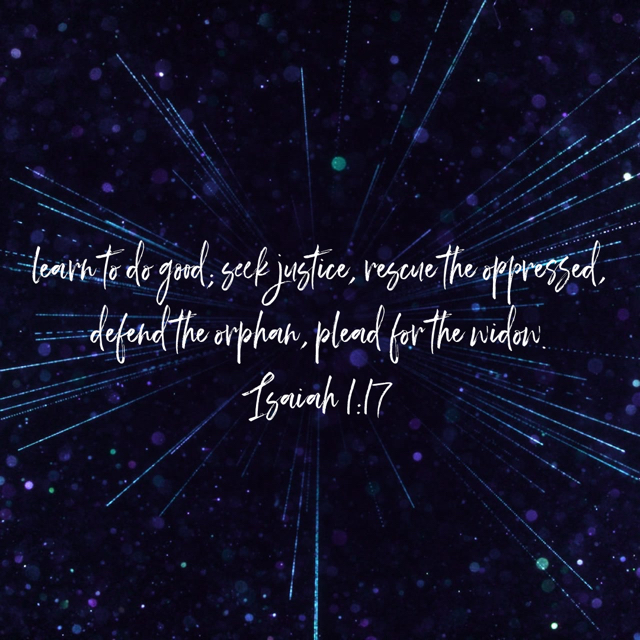
I don’t know anything for sure, so I have decided to err on the side of love. When I read through the “One Another” passages in the New Testament, I see they are overwhelming focused on treating each other with love, patience, and forgiveness. So I will do my best to follow Isaiah’s instructions to do good, rescue the oppressed, defend the orphan, and plead for the widow. If I mess up and rescue, defend, or plead for someone God really didn’t want to me help, I’ll let him sort out in heaven.

The Good Shepherd: Always With Us

Year B, 4th Sunday of Easter; John 10:11-18; Lectionary reading for April 25, 2021

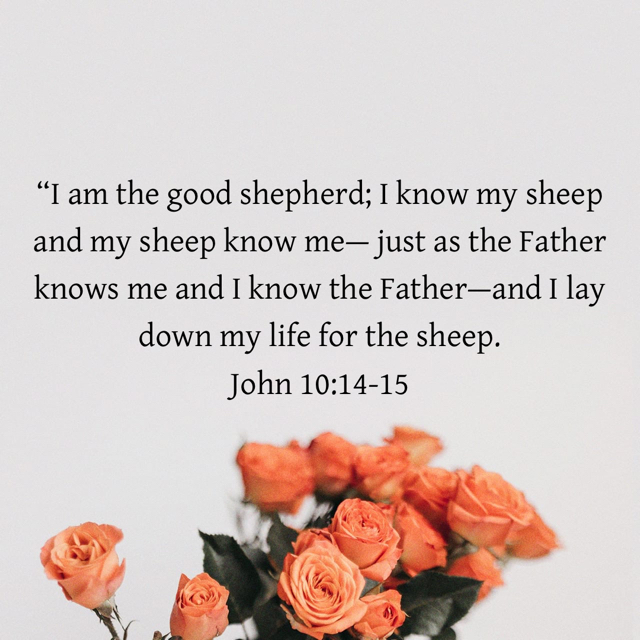
Most people would have had a basic understanding of sheep and their care during biblical times, and so it made sense to use pastoral imagery. Last summer, I argued with my 11-year-old son that a picture of a cow wasn’t, as he thought, a sheep; and we kept sheep on our acreage for several years. Livestock just isn’t something most kids have any connection with anymore! If you have rural kids in your congregation, start by asking them what they have to do to keep their livestock healthy. If you minister to urban children, explain to them how much sheep need the shepherd. Sheep have no way of defending themselves from predators, have no sense of direction and get easily lost, and will happily eat weeds that will make them sick if they don’t see grass right under their noses. They are a bit like toddlers—completely dependent on someone else for their care. Thankfully, a good shepherd is a lot like a good parent.

A good shepherd makes sure the sheep are safe, fed, cared for, and most importantly, loved. The good shepherd knows the sheep by name (even though some people couldn’t tell them apart from cows) and the sheep know they can trust the shepherd and follow the sound of his voice. Finally, a good shepherd does whatever is necessary to protect the sheep. Sure sounds like a good parent to me! Hopefully, all the children in your care have a parent in their lives that this reminds them of. If you minister to children in foster care or adopted children, treat this metaphor with care so that you are not pointing out the faults of their biological parents.

Once you have explained that Jesus is talking about how much he loves and cares for us, you are ready to dive into this beautiful book. That’s Me Loving You by Amy Krouse Rosenthal explains that all of nature is God loving us. From a gentle breeze to a persistent mosquito, God’s love surrounds us. Whether we are with our families or off on our own, we can trust the warm feeling inside of us is the love of God.

Questions to ask before you read:

  • How does your family show they love you?
  • How is that like what a shepherd does with their sheep?
  • How do you know they love you even when you aren’t with them?

Questions to ask after you read:

  • What other ways do you think God is showing God loves you?
  • What ways can you show God you love God?

This book makes me tear up every time I read it, so tuck a tissue in your sleeve before you start. Check with the families in your congregation and your library before you buy this book, but if you just have to have it on your shelf, please consider buying it through the links attached to the pictures. You’ll be supporting this blog with a small commission at no additional cost to you. Whatever you choose, please subscribe to this blog or to my Facebook page and spread the word about Storybook Ministry to your friends who minister to children.

Rosenthal, Amy Krouse. That’s Me Loving You. Random House Books for Young Readers, 2016.

Love With Actions, Not Just Words

Year B, 4th Sunday of Easter; 1 John 3:16-24; Lectionary reading for April 25th, 2021

I did a double take when I read the scripture for this week. Hadn’t I just written about sharing and caring for our neighbours? Why yes, yes I did, just 2 weeks ago. But that’s the wonderful thing about the Bible: when a lesson is important, it is repeated. “Love one another” appears 16 times in the New Testament! It’s a good thing my collection of books features more than a few lessons in getting along—I’m going to need all of them.

It’s easy to forget that love is more than a warm feeling towards our neighbours. In this passage, the apostle John reminds us that love is also more than words. It isn’t enough to feel love; it isn’t enough to speak love; God calls us to love with action. Sometimes, this kind of love comes more naturally for children than it does for adults. Best friends Maddi and Sofia do everything together, but when Sofia impulsively runs into Maddi’s apartment for a snack, she discovers Maddi’s fridge is… empty. She hatches a plan to help her friend while keeping the empty fridge a secret.

Globally, approximately 854 million people regularly do not get enough to eat. Hunger kills 25,000 people every day. These numbers are so high they are difficult to even conceptualize. But those are our global neighbours, surely the situation is better closer to home? Over 4.4 million Canadians experienced food insecurity in a 2017-2018 report, and experts estimate that number to be much higher right now because of the COVID pandemic. Clearly, hunger is not an issue exclusive to developing nations. While I don’t suggest throwing these numbers around in your children’s ministry, I bring them up because in Canada, empty fridges are an invisible problem. Sofia discovered Maddi’s empty fridge because she could run faster than Maddi. Hunger can be a shameful secret for many families.

This story celebrates kids helping kids, but it also teaches children the importance of reaching out to adults for help when a problem is more than they can handle. Reading this book is an opportunity to broach the tough topic of poverty with the children in your ministry, but it can be a wake up call to your wider congregation as well. John calls us to love with actions and in truth: are we living up to that call when so many of our brothers and sisters around the world still cry out for food?

Purchasing Maddi’s Fridge through my amazon links supports the blog (and my book-buying habit) with a small commission. Please consider subscribing to the blog or my Facebook page, so you always have a great book recommendation at your fingertips.

Brandt, Lois. Maddi’s Fridge. Flashlight Press, 2014.

How Do We Teach Children Safety, Without Making Them Afraid?

Year B, 3rd Sunday of Easter, 1 John 3:1-7; Lectionary reading for April 18, 2021

I really wanted to focus on the joy of the first verse in this reading:

See what great love the Father has lavished on us, that we should be called children of God!

1 John 3:1

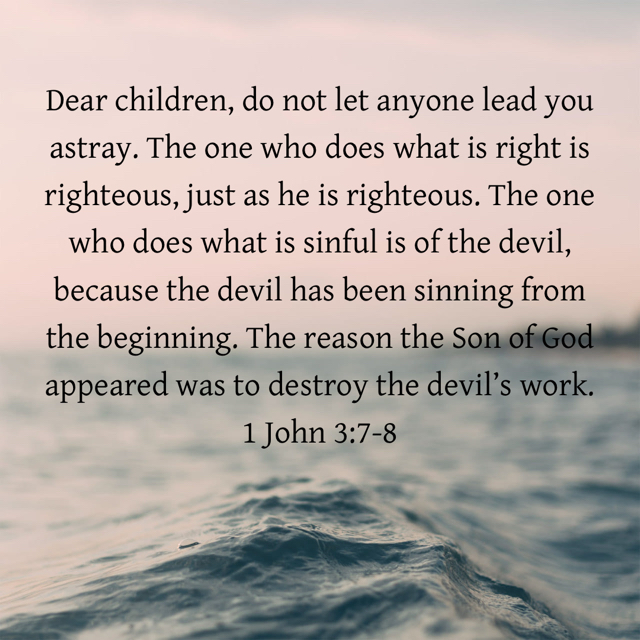
Unfortunately, there is more to the message of this passage that needs to be addressed. Our world is full of wonder and goodness, but there is evil here too. There are people who refuse the designation “child of God” and choose instead to hurt others and destroy creation. Our children need to know that not everyone is trustworthy. It is imperative that we teach them to stay safe.

In our age of 24-hour news channels and instant disaster updates sent straight to our phones, stories of evil can be difficult to escape. As adults, we can filter this information with what we know of the goodness of the wider world. Children cannot. The world can seem to be a very frightening place when the adults around them discuss murder and mayhem within earshot.

Michael Leannah’s book Most People is a simple and comforting antidote to that kind of fear. It gently explains that while there are some bad people, most people in the world are kind, helpful, and safe to be around.

Most people want to make other people—even strangers—feel good. Most people are very good people.

Michael Leannah

Jennifer Morris’s illustrations back up this message by depicting an impressive array of diverse people doing good things in a variety of circumstances. She draws people of all sizes, colours, abilities, and lifestyles, which gives readers an opportunity to talk about the expectations we have about certain groups of people.

This book does not deny the existence of evil, and I don’t suggest you do with your children, either! Until God’s will is fully done on Earth as it is in heaven, we need to teach our children ways to keep safe without making them fearful. We are all children of God, and most people live up to that calling. Let’s give the children in our care a message of hope along with our necessary messages of caution.

Questions to ask before you read:

  • What should you do if you get separated from your parent/family/caregiver?
  • Look through the illustrations and ask the children what they think about a few different people, and ask them why they think that.
  • Do you think people are mostly good or mostly bad?

Discussion after you read:

  • Go back through the illustrations and talk about people the children had earlier said looked mean, scary, or bad.
  • Can you tell if a person is bad by looking at them?
  • What is the difference between being cautious and being afraid?
  • Remind children that if someone makes them feel unsafe, they should always find an adult they trust.

Please be mindful of your audience when reading this book. If you work with children who have experienced trauma, this book could help them understand that not everyone is as scary as they might think, but they might also feel like their experience is being minimized. If you know little about the children in your care, please make sure your questioning is gentle and that you in no way try to minimize or dismiss any child’s experience of trauma.

This book is really one of a kind, and I can’t recommend it enough. It’s tough to talk to our kids about staying safe without also making them more afraid, particularly of people who look different from their family. Most People can start important conversations in your home, church, or wider ministry.

Here’s a friendly reminder that you can purchase my featured books by clicking on their images. This supports me with a small commission. Please also consider subscribing to the blog or following Storybook Ministry on Facebook to support my work. Thanks!

Leannah, Micheal. Most People. Tilbury House, 2017.

We Are Not Defined By Our Sins

Year B, 3rd Sunday of Easter; Acts 3:12-19; Lectionary reading for April 18, 2021

When I was a child, sin terrified me. I was a Very Good Girl, and there was a lot at stake to keep it that way. While far from perfect, I wanted everyone, including God, to think I was. If I wanted to go to heaven, I had to be perfect, right? Once, shortly after my grandpa taught me how to make the sign of the cross, I did it with my left hand. That was it, I was sure I was going straight to hell, even though God had made me left-handed. I prayed and prayed for forgiveness, but I feared it would never be enough.

I lost my faith as a teenager, partly because I couldn’t keep up the perfection game. I didn’t understand how God could have made me so flawed and then wanted me to follow all these rules! I didn’t have enough scriptural understanding or guidance to survive that paradox. Rather than feel the shame of failing to meet God’s expectations, I rejected Him altogether. I was a sinner, so I gave up.

Eliza J. Murphy is also a Very Good Girl. She’s even captain of the Worm Rescue Team! But in Abigail Rayner’s book, I am a Thief!, she does something no good girl would ever do: she steals a sparkly green stone from her classroom. Eliza feels terrible about being a thief, but when she starts asking family members about their checkered pasts, she discovers that many of them have stolen things too — but that doesn’t make her feel any better.

Eventually Eliza realizes something important: even if someone is a thief, they are many other things too. Their mistakes do not define them, especially when they make amends. The children in our care need to know that they will mess up, make mistakes, and yes, sin, but that they are more than the sum of their deficits. They are beloved children of God. No matter what they have done, all they need to do is turn away from their mistake and back toward God to have their sins wiped away. There may still be worldly consequences for their actions, but God’s love and forgiveness are assured.

Questions to ask before you read:

  • Have you ever stolen something? What happened?
  • How do you feel when you know you’ve done something wrong?
  • Does someone in your family write down all the mistakes you’ve made? Do you think God does?

Questions to ask after you read:

  • Why do you think Ms. Delaney tells Eliza that she’s brave?
  • Does this book tell you it’s ok to steal?

I loved reading this book, and I think you will too. Click on the book image to purchase it through amazon and you’ll be supporting my work on this blog. Thanks for reading, please subscribe so you always have a book suggestion ready for your ministry!

Rayner, Abigail. I Am a Thief! NorthSouth Books, 2019

God’s Light Through the Universe

Year B, Second Sunday of Easter; 1 John 1:2-2:2; Lectionary reading for April 11, 2021

Did you know that there is more light in the universe than scientists can explain? Even if they take into consideration all the light emitted by all the stars and galaxies, and reflected off all the planets, moons, asteroids, and dust, there’s still more light than there *should* be. Even the darkest parts of outer space still have some light in them, and scientists are still puzzling out how this could be.

Like many people, I love going outside and looking into the night sky to watching the stars and moon, but I don’t enjoy stumbling back through the darkness into my home! But the problem isn’t that it’s too dark, the problem is that my eyes can’t see enough light to guide me home. It’s a problem of perception, not of light. Our eyes can only see a narrow little piece of the spectrum of light, but that doesn’t mean there isn’t any light out there! When God created light to begin the universe, he banished darkness. God is light, and so is creation.

What Is Light? by Markette Sheppard captured my attention because it connects literal light to metaphorical light. There are many excellent books that cover the science of light (here’s a link to my favourite) and some that focus on the metaphorical light within us all (this one is amazing) but this gentle little book gives us a little bit of each. It isn’t a very long book, but that gives you extra time to talk to the children in your ministry about light, both the kind that shines from the sun and the kind that God placed in each and every one of us.

Questions to ask before you read:

  • What do you use light for?
  • Every single food we eat depends on light from the sun. Can you figure out how the sun helps make pizza? What about ice cream?
  • What does it mean when someone says, “you light up the room?”

Questions to ask after you read:

  • The story ends by saying that light can be seen in everything you do. How can you be light for someone today?
  • How are the kind things you do similar to actual light from the sun?

Sheppard, Markette. What Is Light? Simon & Schuster Books for Young Readers; Illustrated edition (May 5 2020)

If you would like to support my work, please click on the links and purchase the books I feature through Amazon. I receive a small commission, and you will be supporting the work of amazing children’s authors!